header

Home | Flags | Stand Info | Pricing & Contact | Links | Free Targets |N.W. Benchrest

Flags

New Vertical Indicator! Click here!

New "Flat Top" ball flag!

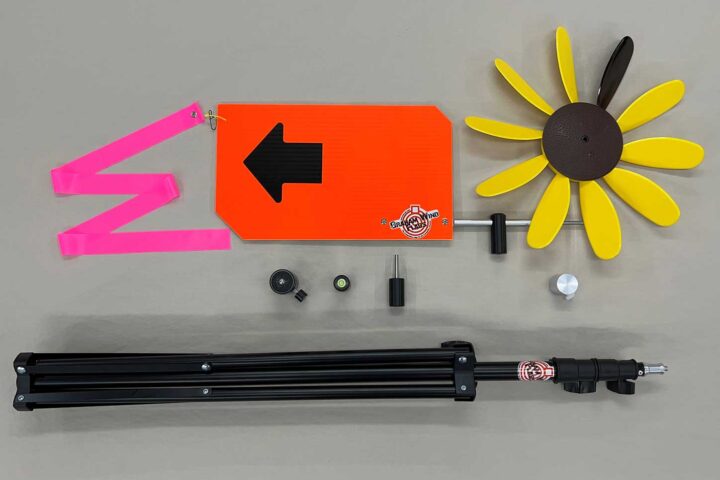
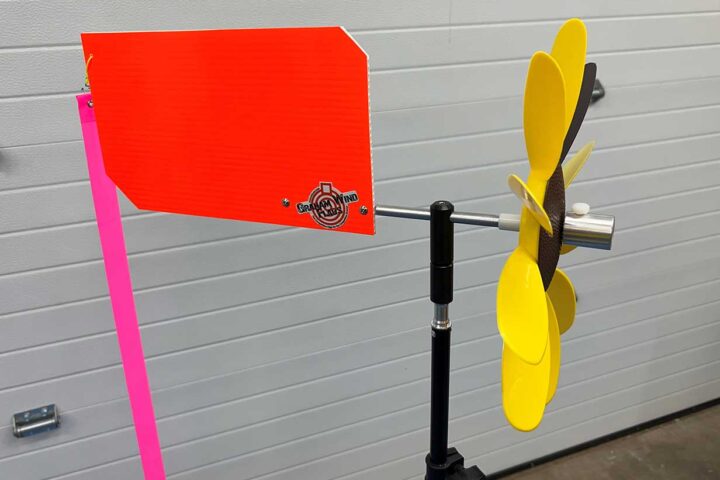
Lou Murdica and I worked together on this new flag design. It has some advantages, especially for those using the raised reticle scopes. The vane shape is shorter top to bottom, but still retains the same area (square inches) as my regular vane. This allows more of these flags to be stacked or overlapped in the scope, and still be able to see the ball because it is now at the top of the flag.

flag pictures

flag pictures

All Flags Feature...

The pivot is made of Delrin and has a stainless ball bearing pivot system and is now available for either 3/16” or 1/4” pivot pins. The pivot also has a set screw so you can easily change the balance point of the flag to accommodate heavier or lighter tails.

This is an extremely sensitive pivot system!

The vanes are made of Coroplast and use a tough vinyl for color instead of paint. Paint always chips. The vanes are bolted to a machined flat section of the cross bar for easy replacement if necessary.

The balls are 50/50 black and white. This allows for easily seeing if you are shooting in a head or tail wind, and are big enough to read at distance. Black = outgoing wind. White = incoming wind.

Available Options

  • Super Bright High Visibility Vinyl Colors.
  • Extra Large Vanes. Even more visibility at distance!
  • Stripes, arrows, or ??? I can customize to your specs!
  • Finger adjustable balance point.
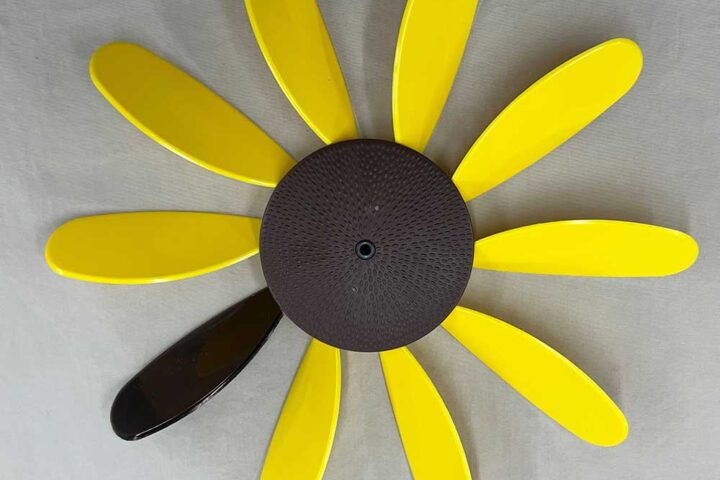
  • Combo Flag usable as ball or daisy.

Introducing the new Graham “uppy/downy” vertical indicating wind flag, for the vertically challenged!

flag pictures

Due to the steep berms used as backstops behind the 50 and 100 yard lines at the Tacoma range, unexplained vertical in the groups seemed to plague us on a regular basis. Last season I began studying the situation and working together with several of our NW shooters in the hope of developing an indicator that might help us with this problem. There has been some work done mostly in rimfire BR on this issue and I was given a flag to study by a local rimfire BR shooter. After studying it for a while I found several problems with the design that needed to be addressed, but it did plant the seeds of what I did and didn’t want in an indicator.

By midsummer my first prototypes were being used by guys at the Tacoma shoots and we began figuring out how to use them and started working out the bugs. Obviously they are used in conjunction with your regular wind flags, and can be used in a way that you don’t really have to think too much about them until they pop up or down and tell you there is something happening you might want to consider. (Like a stop sign popping up) Your main focus can still be on your regular flags. Once you get used to using them there does seem to be some usable information available, (besides don’t shoot!), such as the stability of the flow in certain situations. At any rate my hope is this indicator can help give us a little better understanding of these issues that some ranges have and maybe even help us to be able to deal with them a little better.

Uppy/downys are made of stainless and delrin, and the colors are High Visibility vinyl. They require a stand to set them on. $65.

UPDATE! There have been some changes made to the u/ds. Here is the scoop...

At the Cactus this year we saw the opportunity to incorporate some changes that enhance more than just the vertical indication of this flag. The vertical indication will of course still be there. That was the original intent of this indicator. What was unexpected when we started this project was that there was a big added bonus with it, and that is it can in some situations show the stability of the flow very well. At the Cactus there was a lot less berms, and a lot more flow so the indication of the stability of the flow became more important in that situation. The problem was that the indicator showed the flow well in the stiff wind as long as it was pointed in the right direction, (going with the wind) but if the wind changed directions the indicator could be pinned down and rendered useless.

So, the obvious solution was to redesign it so that it could, when it needed to, turn and go with the wind. I originally did not want this indicator to rotate. I was worried that it would make it too hard to read, and it did very well indicating the up and down over the berms as it was. But, this unexpected bonus, (showing the stability of the flow) caused me to reconsider. At this point I believe the bonus is at least as important as the original intent of the indicator. So it now turns, but it is still meant to be used in conjunction with your regular wind flags. It is not designed to follow every little thing (horizontally) in the wind like your regular flags do. The vertical indication always takes precedence, but now it is able to casually move with the wind, and avoid the maxed out pinned down state. You can still read the vertical and flow in any position it is in and it still retains its ability to return to horizontal in a no up/down draft condition as before.

Copyright © 2009, Rick Graham. Design by Bugaboo Design.

underline